


Key Takeaways
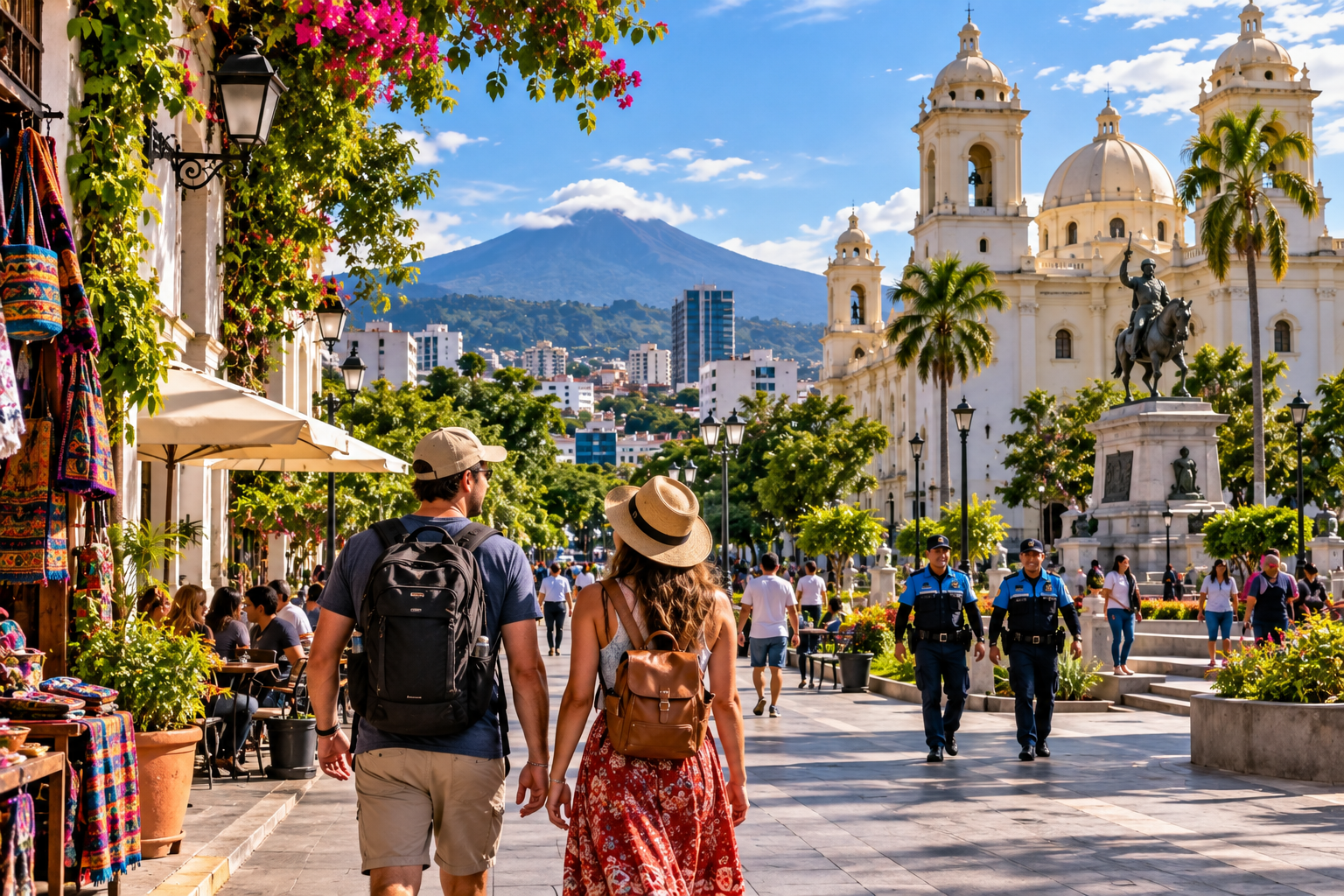
- Is El Salvador safe in 2026? Yes — the U.S. State Department rates it Level 1, its lowest-risk travel advisory.
- El Salvador closed 2025 with a homicide rate of about 1.3 per 100,000 inhabitants, among the lowest in the Americas.
- The main tourist areas — San Salvador, El Tunco, El Zonte, Santa Ana, Suchitoto and the Ruta de las Flores — are considered safe for visitors.
- Petty theft is the main risk: keep valuables out of sight and use licensed transport or rideshare apps.
- Avoid intercity travel at night and political demonstrations, and check your government’s latest advisory before you fly.
Is El Salvador safe? It’s the number one question travelers ask before booking a trip to this small Central American country — and in 2026, the answer is a confident yes.
El Salvador has undergone one of the most dramatic safety turnarounds in the world. A destination once defined by gang violence is now one of the safest countries in the Americas for visitors.
This guide answers the question honestly and completely. We’ll cover official advisories, real crime statistics, safe areas, practical precautions, and everything you need to travel with confidence.
Let’s separate the outdated fear from today’s reality.
Table of Contents
Is El Salvador Safe Right Now? The Short Answer
Is El Salvador safe today? Yes — the country is far safer than its old reputation suggests, and international visitors consistently report feeling comfortable throughout their trips.
The transformation is not just anecdotal. It’s backed by hard data, official government advisories, and record-breaking tourism numbers.
Over the past few years, gang activity has fallen sharply, and with it, violent crime and homicides. Gang activity has decreased over the last three years, causing a drop in violent crimes and murders.
That said, « safe » doesn’t mean « risk-free. » Like any destination, El Salvador rewards travelers who stay aware and use common sense.
So while the honest answer to « is El Salvador safe » is yes, the smartest answer is: yes, when you travel prepared.
Is El Salvador Safe According to Official Travel Advisories?
When assessing safety, the most trusted starting point is your government’s official travel advisory. Here, the news is very positive.
The U.S. State Department rates El Salvador at Level 1: Exercise Normal Precautions — the lowest and most reassuring category in its four-tier system.
This is a historic shift. This official endorsement places El Salvador at the same safety level as Switzerland, Japan, and Australia.
For travelers, a Level 1 rating signals real confidence from the U.S. government in the country’s security improvements. It’s the same level given to many popular European destinations.
Other governments echo this cautious optimism. Security has improved considerably, though advisories still recommend normal traveler awareness.
Always check your own country’s latest advisory before departure, since ratings can be updated. But as of 2026, the official verdict on « is El Salvador safe » is clear and encouraging.
Is El Salvador Safe Based on Crime Statistics?
Numbers tell the story even more powerfully than advisories. If you want to know how safe the country really is, the crime statistics are striking.
El Salvador closed 2025 with only 82 homicides nationwide, with the homicide rate dropping to 1.3 per 100,000 inhabitants.
To put that in perspective, this places El Salvador among the safest countries in the Western Hemisphere — a stunning reversal from just a decade ago.
The turnaround began with a major government crackdown. Since 2022, the Government of El Salvador has taken strong action against the gangs MS-13 and Barrio 18 (U.S. Department of State).
Violent crime, which once dominated headlines, has become rare in everyday tourist life. Most visitors never encounter anything more serious than ordinary petty theft.
So when data drives the question, the evidence points firmly toward yes.
Is El Salvador Safe for First-Time Visitors?
Is El Salvador safe if you’ve never been to Central America before? Absolutely — and it’s actually one of the easiest countries in the region to explore.
The country is small and compact, so distances between attractions are short. You spend less time on long, remote drives and more time in established, well-traveled areas.
First-timers benefit from a growing tourism infrastructure, with modern hotels, reliable transport, and English spoken in the main tourist zones.
Guided tours are especially reassuring for a first visit. Local operators know the safe routes, provide cultural context, and handle logistics so you can relax.
For newcomers wondering whether the country is safe enough for a smooth first trip, the answer is yes — particularly along the main tourist corridor.
Is El Salvador Safe in the Main Tourist Areas?
Location matters. Is El Salvador safe everywhere equally? No — but the areas travelers actually visit are the safest parts of the country.
For tourists, El Salvador is generally safe, especially along the main travel route between Santa Ana and El Tunco, where most infrastructure, hostels, and transport links are concentrated.
Here’s a quick look at the most popular destinations and why they’re considered safe for visitors.
San Salvador
The capital’s main districts, historic downtown, and upscale neighborhoods are well-patrolled and welcoming. Stick to established areas, especially after dark, and use rideshare apps for getting around.
El Tunco and the La Libertad Coast
The surf capital is compact, walkable, and full of travelers. Its lively streets, hostels, and restaurants make it one of the most comfortable places to stay on the coast.
El Zonte (Bitcoin Beach)
This peaceful village has a slower, wellness-focused vibe and a strong sense of community. It’s popular with solo travelers and digital nomads alike.
Santa Ana and Lake Coatepeque
The Santa Ana region, its volcano, and the nearby caldera lake are major tourist hubs with guided hikes and organized day trips.
Suchitoto and Ruta de las Flores
These colonial and highland areas are calm, artistic, and firmly on the tourist trail, making them reliably safe stops.
In these zones, the everyday answer is a straightforward yes.
Is El Salvador Safe at Night?
Nighttime always requires extra care anywhere in the world, and El Salvador is no exception. So, is El Salvador safe after dark?
Within busy tourist areas like El Tunco or central Santa Ana, evenings are lively and generally comfortable. Restaurants, bars, and streets stay active with fellow travelers.
The key rule is to avoid intercity travel at night. Even official guidance reflects this caution. U.S. government employees are allowed to travel throughout the country during daylight hours but are prohibited from traveling between cities at night due to the risks.
Notably, there are exceptions built in for the busiest tourist routes. U.S. government employees are allowed to travel at all hours between San Salvador and the international airport, as well as the La Libertad department.
For visitors, the takeaway is simple: enjoy the nightlife within your town, but save long-distance road trips for daylight.
So is El Salvador safe at night? Yes, with sensible timing and smart routing.
Is El Salvador Safe for Solo Travelers?
Solo travel raises its own questions, so let’s address safety for those exploring alone.
Many solo travelers report smooth, incident-free trips, especially along the popular Santa Ana–El Tunco corridor. The social hostel scene makes it easy to meet others and travel in small groups.
Staying in established zones, using vetted transport, and limiting late-night movement dramatically lowers any risk. Most problems tourists face come from careless routing, not from the destination itself.
For solo female travelers, standard precautions apply. Safety scores in this category are moderate rather than perfect, so dressing to local norms and trusting your instincts is wise.
Sharing your live location with a trusted contact and keeping to daylight transit between cities adds an easy layer of security.
With these habits, the answer for solo adventurers is a reassuring yes.
Is El Salvador Safe for Families?
Traveling with kids? Is El Salvador safe for a family vacation? For most families sticking to tourist areas, yes.
The compact geography is a real advantage. Short drives mean less time keeping restless children entertained in the car and more time enjoying beaches, lakes, and gentle hikes.
Family-friendly experiences abound: swimming at Lake Coatepeque, easy nature walks, coffee farm visits, and exploring colorful colonial towns.
Choose comfortable, well-reviewed accommodations in safe neighborhoods, and consider private transport or guided day tours for convenience and peace of mind.
As with any trip, keep valuables secure and supervise children in crowded spots. Beyond that, families find the country warm, welcoming, and easy to navigate.
So is El Salvador safe for families? With a little planning, it certainly is.
Is El Salvador Safe? Understanding the State of Exception
To fully answer the safety question, it helps to understand how the country achieved its dramatic security gains — and what that means for visitors.
The turnaround is closely tied to an ongoing « state of exception, » a set of emergency security measures introduced to dismantle the gangs.
One honest observation from travelers is that the safety feels highly managed rather than effortless. The calm is real, but it’s the result of a strong, controlled security presence.
For ordinary tourists, this rarely affects day-to-day travel. Police and military are visible, which most visitors find reassuring rather than intimidating.
One practical note: avoid political demonstrations. Foreign nationals are advised to steer clear of political gatherings, as even peaceful events can develop unpredictably and carry a risk of detention under emergency provisions.
Understanding this context gives a complete, honest picture when planning your trip.
Is El Salvador Safe from Petty Crime?
Even in safe destinations, petty crime exists. So is El Salvador safe from pickpockets and opportunistic theft? Mostly, yes — but stay alert.
Petty theft remains the most common issue tourists encounter, far more so than any violent crime. Crowded markets, bus stations, and busy streets are the usual hotspots.
The prevention playbook is universal and effective. Keep valuables out of sight, stay aware in crowded tourist areas, and use licensed transport.
Carry only the cash you need for the day, avoid flashing expensive electronics or jewelry, and keep digital copies of your important documents.
Use hotel safes for passports and extra cash, and stay attentive when withdrawing money from ATMs.
With these simple habits, the answer on petty crime becomes a comfortable yes for the vast majority of visitors.
Is El Salvador Safe for Getting Around?
Transport is a big part of any trip, so is El Salvador safe when it comes to getting from place to place? Generally, yes — with a few smart choices.
Rideshare apps operate in San Salvador and are a safe, affordable, and convenient option for city trips and airport transfers.
Renting a car offers great flexibility, and the main roads are in good condition. Just favor daytime driving and avoid long intercity routes after dark.
Organized tours and private drivers are popular precisely because they remove navigation stress and add a layer of local knowledge and security.
Public « chicken buses » are cheap and authentic but slower and more crowded. Many safety-conscious travelers skip them for longer journeys.
Choose reputable transport and drive defensively, and the answer on the move is reassuring.
Is El Salvador Safe for Your Health?
Safety isn’t only about crime. Is El Salvador safe from a health and medical standpoint? For travelers, it’s in good shape.
Healthcare quality and accessibility score well, particularly in San Salvador, where private clinics and hospitals serve international visitors.
Travel insurance is still strongly recommended for peace of mind, covering everything from minor illness to unexpected emergencies.
Drink bottled or filtered water, use plenty of sunscreen, and bring insect repellent for jungle, lake, and rural areas.
Be aware of natural factors too: the country sits in an active seismic zone, and heat can be intense in the dry season. Know your accommodation’s basic emergency procedures.
With standard precautions, the health-related answer is positive.
Is El Salvador Safe? Essential Entry Requirements
Part of a smooth, safe trip is arriving prepared — our El Salvador travel guide covers all the logistics. When preparing your trip, don’t overlook the simple entry logistics.
Entry is refreshingly easy for most visitors. No visa is required for U.S. citizens; on arrival you acquire a Tourist Card for 12 USD, and your passport must be valid for at least six months.
The official currency makes budgeting simple. The official currency is the U.S. dollar, so no exchange is needed.
A handy tip: bring small bills like $1, $5, and $10, since getting change for $50 or $100 notes can be difficult.
Confirm the latest entry rules with an official source before flying, as requirements can change. Arriving organized removes stress and starts your trip on the right foot.
Is El Salvador Safe? Smart Precautions Checklist
Let’s turn that answer into action. These simple habits keep the vast majority of trips smooth and trouble-free.
Stay in established tourist zones with good infrastructure and transport links.
Use trusted, licensed transport, and prefer daylight travel between cities.
Keep valuables hidden and carry only the cash you need each day.
Share your live location with a trusted contact back home.
Recheck your government’s travel advisory shortly before departure.
Avoid political demonstrations and large, unpredictable gatherings.
Ask your hotel or host about any specific streets or times to avoid.
Keep digital copies of your passport and key documents.
Follow these, and you’ve answered the safety question with a resounding, practical yes.
Is El Salvador Safe Compared to Its Neighbors?
Context helps. Is El Salvador safe relative to other Central American destinations travelers consider?
Thanks to its recent security gains, El Salvador now ranks as one of the safest countries in the region — a title few would have predicted a decade ago.
Its low homicide rate and Level 1 advisory put it ahead of several better-known regional destinations in official safety terms.
Combined with its compact size and short travel distances, this makes it an increasingly attractive alternative for cautious travelers (see our El Salvador tourism guide).
Of course, every country has areas to avoid and precautions to follow. But on the headline question, El Salvador now competes with — and often beats — its neighbors.
So is El Salvador safe compared to nearby countries? By the official metrics, remarkably so.
Is El Salvador Safe? Common Myths vs. Reality
Old reputations die hard. Let’s clear up a few misconceptions about safety for modern travelers.
Myth: El Salvador is one of the most dangerous countries in the world.
Reality: That was historically true, but the situation has changed dramatically, with crime now at record lows.
Myth: Tourists are frequently targeted by violent crime.
Reality: Violent crime affecting tourists is rare. Petty theft is the main, manageable concern.
Myth: You can’t travel independently.
Reality: Many travelers explore independently along the main corridor. Tours are optional, not mandatory.
Myth: The whole country is off-limits.
Reality: The main tourist areas are open, welcoming, and busy with international visitors.
Cutting through the myths makes the real answer much clearer.
Frequently Asked Questions: Is El Salvador Safe?
Is El Salvador safe for American tourists?
Yes. The U.S. State Department’s Level 1 advisory is its strongest endorsement, placing the country among the safest for American travelers.
Is El Salvador safe to visit alone?
Yes, for most solo travelers who stick to established areas, use trusted transport, and limit late-night intercity movement.
Is El Salvador safe for female travelers?
Generally yes, with standard precautions. Dress to local norms, trust your instincts, and favor group or daytime activities where possible.
Is El Salvador safe to drive in?
Yes, on main roads during daylight. Avoid long intercity drives at night and choose reputable rental options.
Is El Salvador safe right now in 2026?
Yes. With a Level 1 advisory, record-low homicides, and booming tourism, it’s one of the safest times ever to visit.
Final Verdict: Is El Salvador Safe for Tourists?
So, is El Salvador safe for tourists? The honest, evidence-based answer is a clear yes — with the same common-sense precautions you’d use anywhere.
The country has transformed from a place travelers avoided into one of Central America’s safest and most exciting destinations.
Official advisories, plunging crime rates, and thousands of positive traveler experiences all point in the same direction.
Stay in established areas, travel smart, and keep your wits about you, and you’ll likely wonder why you ever hesitated.
If you’ve been asking is El Salvador safe, let 2026 be the year you discover the answer for yourself — and fall in love with this rising Central American star.